
Agoura Hills Previous Residents: Address Sources
An address history needs several eras and several kinds of evidence. Recorded documents establish title instruments and legal descriptions. The Assessor stabilizes the current AIN and displays parcel and value history. City files date projects and name applicants or owners in a role. Directories, census schedules, photographs, and obituaries add occupancy or family context. The table shows the verified reach and the limits of each source.
| Source | Years it covers | Where held | What it shows |
|---|---|---|---|
| Recorded documents | 1851-present | RR/CC Norwalk; older and newer floors | Title instruments, liens, legal descriptions, return addresses |
| Assessor parcel detail | Current plus displayed roll or base-value history | LA County Assessor | AIN, situs, characteristics, year built or effective year, values |
| City planning and building files | Exact start not located | Agoura Hills Community Development or request channel | Permit, applicant role, project scope, inspection milestones |
| City directories | 19th-century county collection; Agoura run unknown | Californiana closed stacks and library databases | Listed subscriber, occupant, occupation, address, by title |
| Federal census | 1790-1950 public nationally | NARA and library databases | Household membership, relationship, occupation, tenure questions |
| Local photographs and history | 1906, 1914, 1926, 1950s, c.1990 examples | LA County Library | Landscape, ranch, road, and development context |
| Sanborn maps | Agoura-specific year not verified | Library of Congress and library inquiry | Footprint and use detail where a sheet exists |
The table keeps the previous residents question honest. A deed does not list every occupant, a directory does not prove title, and a photograph does not identify all people in a house. Build a timeline from sources that answer different parts of the same address question.
Start Agoura Hills House History With the AIN
Begin with the current situs in the Los Angeles County Assessor Portal. Save the formatted address, ten-digit AIN, parcel status, use code, tax-rate area, year built or effective year, land and building measures, displayed values, and map link. The AIN and legal description are the anchors that keep a modern address connected to older land.
The public Internet parcel display suppresses the owner name and owner mailing address. That means the Assessor is an address-normalization and property-characteristics step, not the full answer to who lived there. Request lawful roll information or move to the recorder when a title party is needed. Never infer occupancy from an exemption, value field, or mailing assumption.
Open the Assessor Parcel Viewer to check the selected polygon and adjoining parcels. If the address lies in a tract created from ranch acreage, record the parent parcel, tract, lot, block, or metes-and-bounds language before searching old records. That bridge prevents a modern street name from breaking the previous residents trail.
Note: The current AIN is the starting key; it does not tell you when the modern street address first existed.
Find the Current Acquisition Deed at Norwalk
Los Angeles County RR/CC keeps recorded real-estate instruments from 1851, but the name index is not searchable online. The county explains that recorded home addresses can belong to protected officials and that it cannot identify every protected person in the corpus. Searchers therefore use the alphabetical index by party name and recording year in Norwalk. Material from 1851 through 1957 is on the lower level; 1958 through the present is on the second floor.
Use the current acquisition name and likely year as the first backward step. Search the person as grantee, copy the grantor, recording date, document number or book-and-page reference, and legal description, then obtain the instrument. The deed's legal description is more durable than the street line. A record entry points to a document; the instrument states what interest was conveyed.
The Los Angeles County Clerk and recorder services page is the official county route represented below.
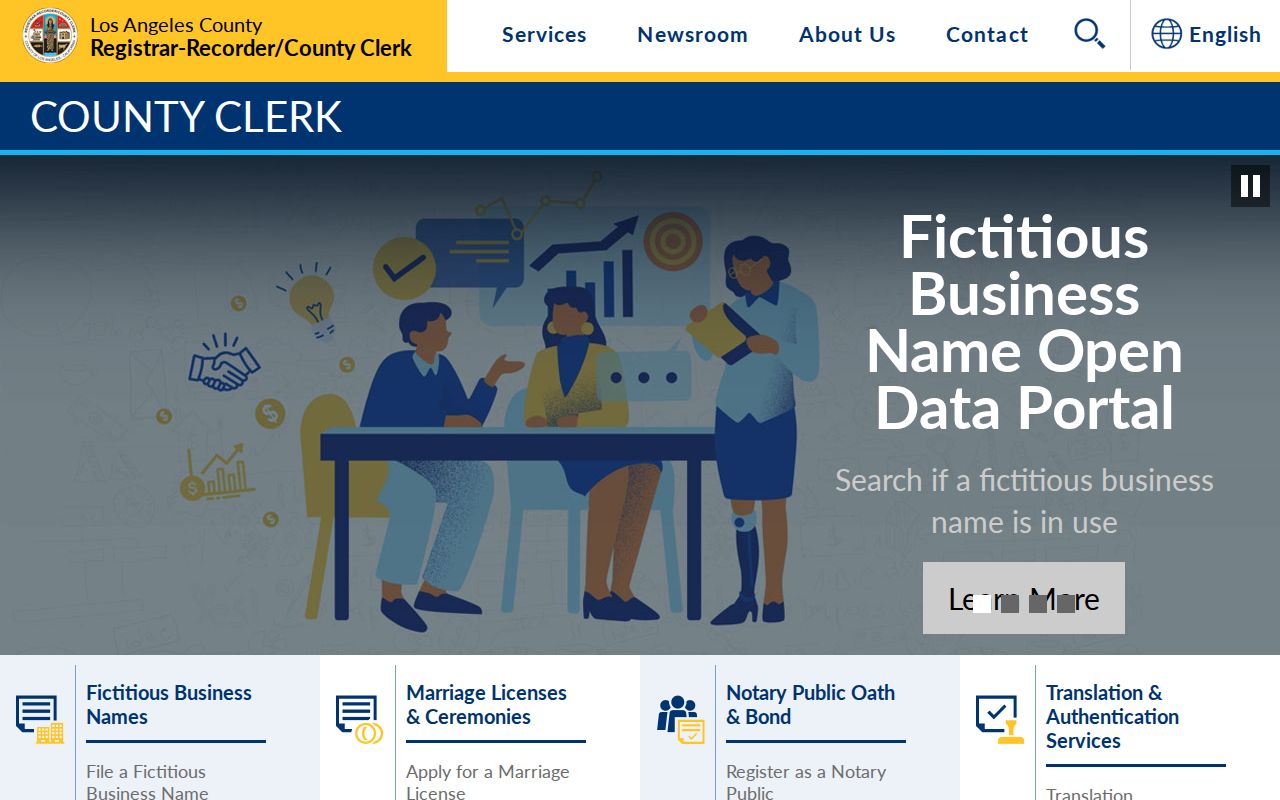
The Los Angeles County Clerk and recorder services show the county's separate record channels. Check the current real-estate appointment instructions before traveling because the index is an office process, not a hidden web directory.
Trace Agoura Hills Past Owners Through Deeds
Once the current deed is identified, make the chain run backward. A grantor is the party conveying or encumbering an interest. A grantee receives an interest. Search the prior grantor as grantee in an earlier year, then compare the legal description and parcel history before accepting the match. Repeat while the same land remains intact.
- Copy the current deed's grantor, grantee, recording date, instrument reference, and full legal description.
- Search the grantor side as a grantee in the preceding likely years, testing spelling and initials.
- Read the earlier instrument and confirm that tract, lot, block, or metes-and-bounds language follows the parcel.
- Separate deeds of trust, reconveyances, quitclaims, liens, and releases from the title transfers they accompany.
- Stop or change methods when a subdivision, parent parcel, or land description changes the address history.
- Grantor
- The named party conveying, releasing, or encumbering an interest.
- Grantee
- The named party receiving an interest in the recorded instrument.
- Chain of title
- The linked sequence of recorded interests used to trace land ownership backward.
- Legal description
- The tract, lot, block, or boundary wording that identifies the land beyond a street label.
This deed-chain method is the backbone of an Agoura Hills previous residents search when the question concerns former owners. It does not prove that every owner occupied the property, so add a directory, census, permit, or family record for household context.
Bridge an Agoura Hills Subdivision to Ranch Acreage
Agoura's local geography makes land continuity especially important. The community moved from ranching and farming through postal and tract development before city incorporation in 1982. A modern address may have been carved from a ranch parcel, and the current street may not appear in an early deed, census, or directory. Use tract maps, lot and block references, parent parcels, ranch names, and metes-and-bounds descriptions to bridge the change.
Place names can also shift. Search Vejar Junction, Picture City, Agoura, Agoure, nearby Cornell or Calabasas, and Los Angeles County when the period supports it. The name “Agoura” itself creates an OCR trap, so browse a date or location when a text search fails. Keep the old heading beside the modern address rather than replacing it.
Water and transport provide useful era markers. Las Virgenes Municipal Water District formed in 1959, Colorado River water arrived in 1963, and the Ventura Freeway changed access after 1956. Those facts help decide whether to prioritize ranch deeds, newspapers, directories, permits, school records, or modern parcel systems.
Use Reverse Directories Without Overclaiming Coverage
A reverse or criss-cross directory can connect a street number to a listed subscriber or occupant for one publication year. County library research verifies nineteenth-century directories in the Californiana Collection and regional databases, while digitized street-reverse volumes mainly cover present Los Angeles city communities. No authoritative title-and-year run for Agoura was located. Verify the place heading, publisher, page, and scan before stating that a previous resident appears.
Read the abbreviation key first. A publisher may use `h` for householder and `r` for resides, or other marks for boarding, business, or telephone subscription. Compare the entry with the deed chain and census. Disappearance can mean a move, death, nonpublication, a changed postal heading, or an unlisted household. It is not a single answer.
The Agoura Hills city directory collections page holds the detailed shelf and entry-reading method. For a house history, use the directory as a dated occupancy clue and keep the title-level uncertainty visible.
Pair Agoura Hills Directories With Census Years
Directories and censuses fill different gaps. A directory can show a listed name, address, occupation, and possible spouse notation between census decades. A census can show household relationships, ages, occupation, and other enumerator questions at one fixed point. Compare them rather than treating a directory entry as a complete census household.
- Stabilize the historical place heading and enumeration district before reading a name.
- Copy the directory entry and its abbreviation key, then cite the volume and page.
- Check the 1930, 1940, or 1950 census for relationships and household composition.
- Move to the next directory year and record a change of address, spouse, occupation, or postal heading.
- Use an obituary, death index, probate record, or later deed to close the trail.
The public census through 1950 can anchor previous residents before modern parcel records dominate. A gap should be described as a gap, not filled with a same-name guess.
Date Agoura Hills Construction and Change
The Assessor's year-built or effective-year field gives a property-era clue. City permits can add application, issue, inspection, and final-status dates. Request planning or building records by exact situs, AIN, tract or lot, permit number, or project number. A permit may name an applicant, owner, contractor, architect, or manager. Identify the role before treating a name as part of a prior household.
Local photographs provide another layer. Verified examples include Lewis Ranch in 1906, highway work in 1914, Malibu Lakeside Club in 1926, Agoura views in the 1950s, and an aerial around 1990. These anchors can bracket a landscape change when a permit begins too late. They are context, not title evidence.
Federal Cases and Former Agoura Hills Connections
Some previous residents leave a federal rather than local court trail. Agoura Hills is in the Central District of California. PACER searches federal cases by party or case and can expose docket and filing context under current federal access rules. A federal party record establishes a case connection, not a residence. Confirm the name with an address, date, organization, or legal description before adding it to a house history.
The PACER case-access page is the official federal search source shown below.
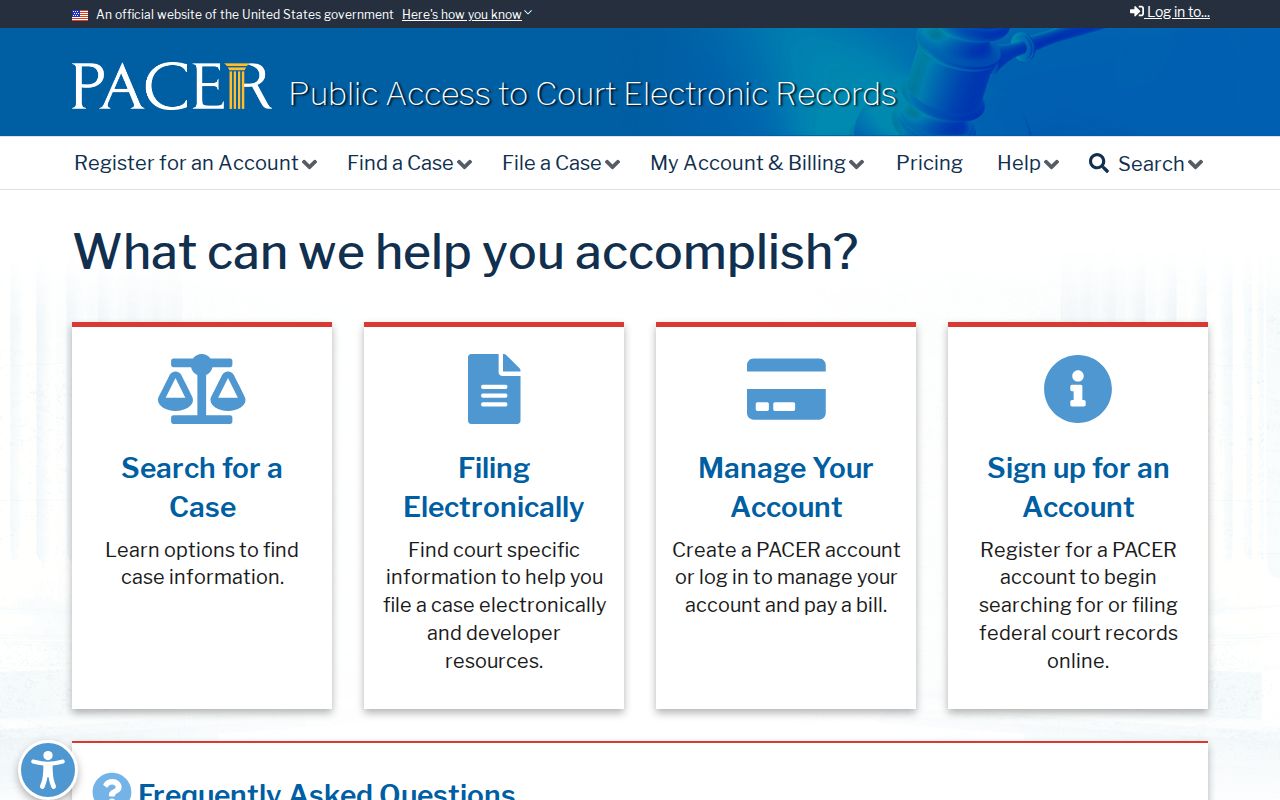
The PACER access page is the official starting point for a federal case search. Use the case number and document trail when available, and remember that opinions are generally free while other access follows the federal fee schedule.
The Central District of California court site identifies the federal venue shown next.
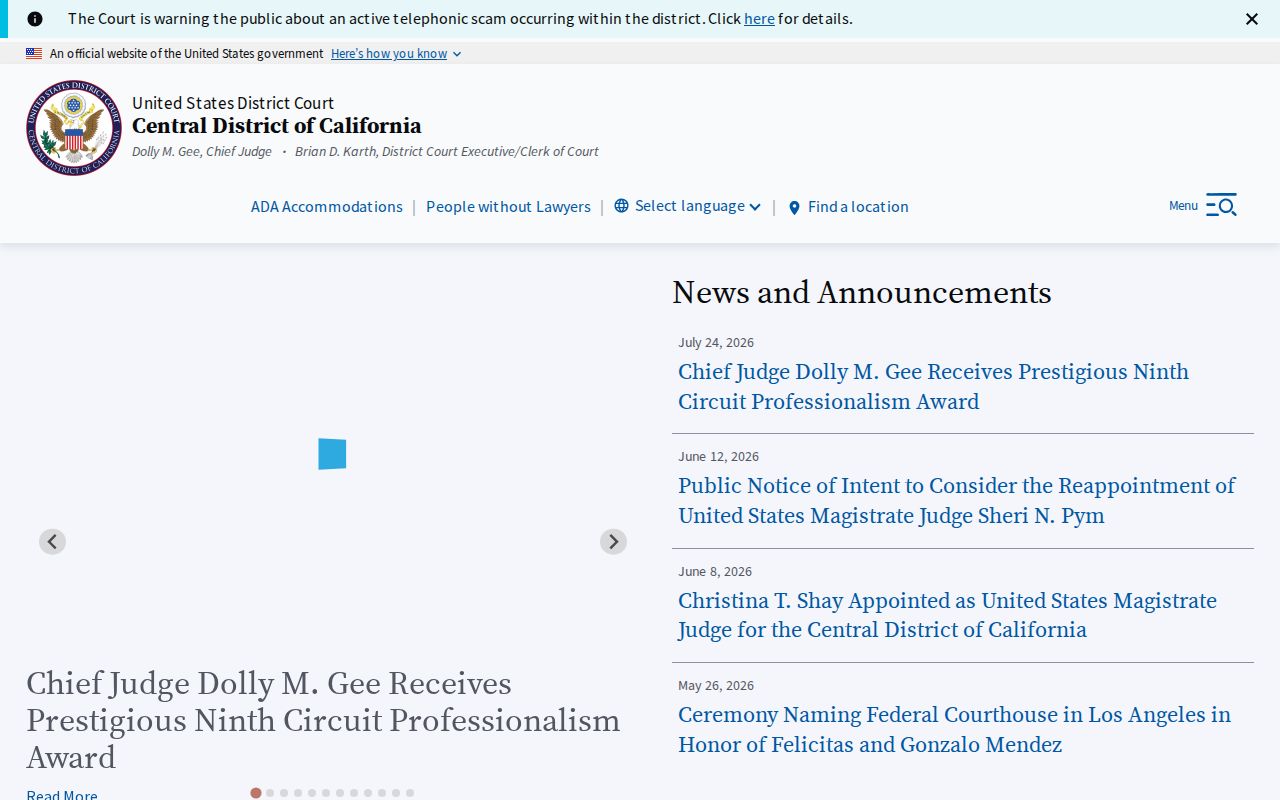
The Central District of California court site identifies the federal venue. It is a separate research lane from Los Angeles Superior Court and the county recorder.
Agoura Hills Past Households in Three Record Layers
Previous residents are best traced by layering sources. Start with the deed chain for title, use a directory for listed occupancy, a census for household relationships, permits for construction events, and obituary or probate material for a named person's endpoint. A death record may confirm an event without giving a current address. A probate petition can identify heirs and counsel where the public file allows.
Reyes Adobe offers a local story-shaped example. The Reyes House and Los Virgenes Rancho are preserved in HABS record CA-329 with measured drawings, photographs, and data pages. The property shows how land title, architecture, images, earthquake and restoration history, and family occupancy can be combined without pretending any one source lists everyone connected with the place.
When an old trail reaches a private association, yearbook, church, veterans, or club record, access depends on the holding organization. Historical donations may be available under archive restrictions. Current membership lists are not presumptively public. Keep the search centered on the address and the source's own access rule.
Lawful use. An Agoura Hills previous residents search supports house history, genealogy, and lawful family research. Never use an address trail to stalk, harass, threaten, or harm anyone.